
PAGE UNDER CONSTRUCTION

The traveler landing in Tangier feels strange, very strange. He is in Morocco, in Africa, but this exoticism seems familiar.
This is Tangier. Near and far, similar and singular, buzzing and peaceful, maddening desires, mysterious as a courtesan, continually between two shores. This is how Tangier has fascinated conquerors, visitors and artists for centuries.

Eugène Delacroix, the famous painter of The Raft of the Medusa, was one of the countless people who were captivated. He spent several weeks there in 1832, accompanying a French diplomatic mission to the Moroccan sultan. Of Tangier, which he discovered, the artist wrote: " I have just been through the city (...) I am quite stunned by all I have seen. We landed in the midst of the strangest people (...) The city's pasha received us in the midst of his soldiers. (...) The Jewish women are admirable. I'm afraid it would be difficult to do anything with them other than paint them: they are the pearls of Eden. Our reception was most brilliant for the place.
(...) In this moment, I'm like a man who dreams and sees things he's afraid will escape him. "
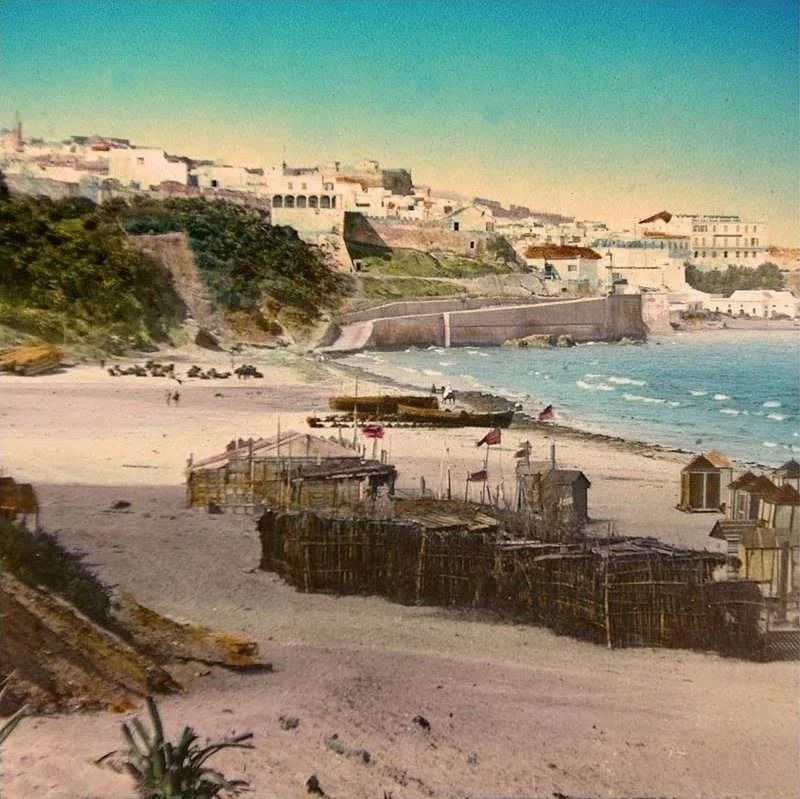
If Tangier has such power, drawing visitors in with its charm, it's because the region is so beautiful. The landscapes are magnificent, the beaches grandiose, bordering the Atlantic here and the Mediterranean there.

It's also thanks to the kindness of the locals. Moroccans cultivate generous hospitality. The people of Tangier have made this a sacred principle. No doubt because foreigners are but a reflection of their own crossbreeding.
It's also because the city itself is bewitching and unsettling.

Far from being the most beautiful city in the world, it's an anarchic, teeming, confused and mysterious metropolis. And yet, everything here seems peaceful, with a joie de vivre, a pleasure in pleasing others that can be felt as you wander through the maze of the old town, smiling enticingly and seeing ghosts still alive in the shadows.

In La chute de Tanger, Thierry de Beaucé gives an exact description: " From the medina to the new town, from the port to the highest houses on the hills, all the districts of the city are easily recognized by the intensity of the slopes, the scents and the lights, the measure of the paths and the shadows; you find your way by the sound, the look, the smell, the pain of the path. The city has the familiar configuration of a human body. Like a human body, it has grown up, become an adult, and we can guess that it is getting older.

Lofti Akalay, a writer from Tangiers who is madly in love with his city, described it as follows: " It's a city open to everything, including myself. The city speaks to me and doesn't talk nonsense. Tangier reminds me that I exist.
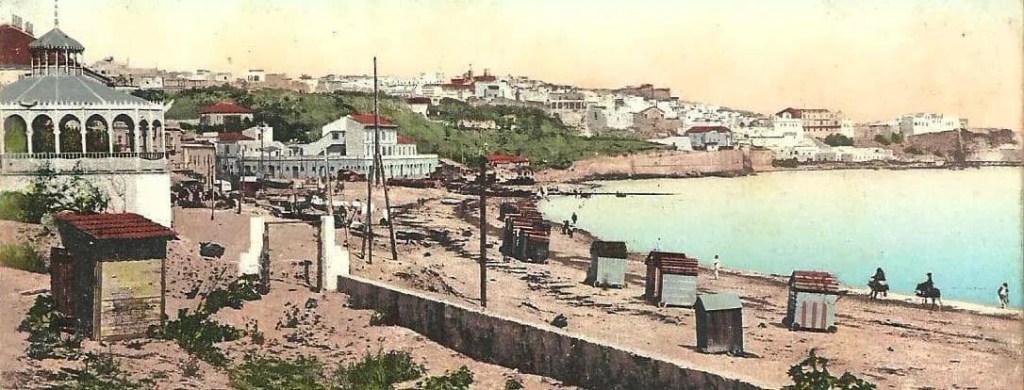
Last but not least, Tangier's appeal lies in its history, its myths, its improbable legends, the wealth of unbelievable stories that have been told and sometimes invented, and the countless people who came for a day and stayed for a lifetime, never knowing why.
All this makes Tangier the most bewitching city in the history of the world...

STORIES FROM TANGER

The birth of Tangier is a fable in itself. It can be read in many of the great founding stories. The historical importance of this region is obvious.
Among others, in the journey of Noah's Ark, a biblical text.
The story goes that God created the flood to punish the wickedness of mankind. Noah built an ark in which he sheltered his family and a pair of each animal species.
The only survivors of the devastation, the ship and its survivors drifted on the waves. One day, a fragile dove sent to unearth the land of refuge returned on board, sullied by clay. " Tin-ja! " cried the crew, " land found! "
And so Tangier was born, according to an interpretation that is certainly fanciful, but which we are willing to accept.

Hercules (named Heracles by the Greeks) is another Tangier legend.
It was he who, with a flick of his shoulder, split the mountain to create the Strait of Gibraltar, linking the Mediterranean to the Atlantic.
The hero defeats Antaeus, son of Gaia, in a titanic battle, and later marries the defeated man's wife, Tinge, who is (perhaps) responsible for the creation of the Pearl of the Strait.
Another superman from Greek mythology, Ulysses, travels to these lands. There, he defeats Polyphene, the Cyclops, who wanted to eat him. The battle takes place in the caves that now bear the name of the famous hero of The Odyssey.
Ulysses also seduced the magician Circe, who wanted to turn him into a pig, and the nymph Calypso, who held him prisoner for a long time on the islet Leila off the coast of Morocco.
Aside from epics, there's also official history, and here again Tangier stands out.

Ibn Batouta, among others. Born into a family of Berber scholars in Tangier in 1304, he died there in 1377. At the age of 22, he embarked on his first journey, a pilgrimage to Mecca. In the end, Ibn Batouta covered over 120,000 km in 30 years, visiting 44 countries. In a narrative, he describes the cities ("If paradise is on earth, it is in Damascus and nowhere else"), the customs, the encounters, the differences ("I witnessed a remarkable thing in this land, that is, the consideration that women enjoy among the Turks") that he will experience and observe, from Timbuktu to Andalusia, from Egypt to China, Yemen, Persia, Anatolia, India, Ceylon, Sumatra, Damascus, Baghdad and Samarkand.
Ibn Batouta certainly represents the quintessence of Tangier: openness to the world, tolerance and curiosity. Qualities that have fertilized the history of this mythical city.
TANGER, BERBER AND MESTIZO

A geographic and strategic crossroads since the dawn of time, the Pearl of the Strait has undergone numerous invasions and an impressive mix of populations. Berbers, Jews, Arabs, Romans, Phoenicians, Vandals, Africans, Europeans and so many others have lived here, as invaders or visitors, and founded the incredible uniqueness of this region of Morocco.

The Berbers (otherwise known as Amazighs) were the original population of this region, which over the centuries was invaded by Phoenicians, Carthaginians, Romans, Vandals from northern Europe, Byzantines and Visigoths.
The Berber kingdoms, allied with the Jews who had long been living in Morocco, fought off the Arab invasion and went on to create Al Andalus, that magnificent era of cultural crossbreeding.
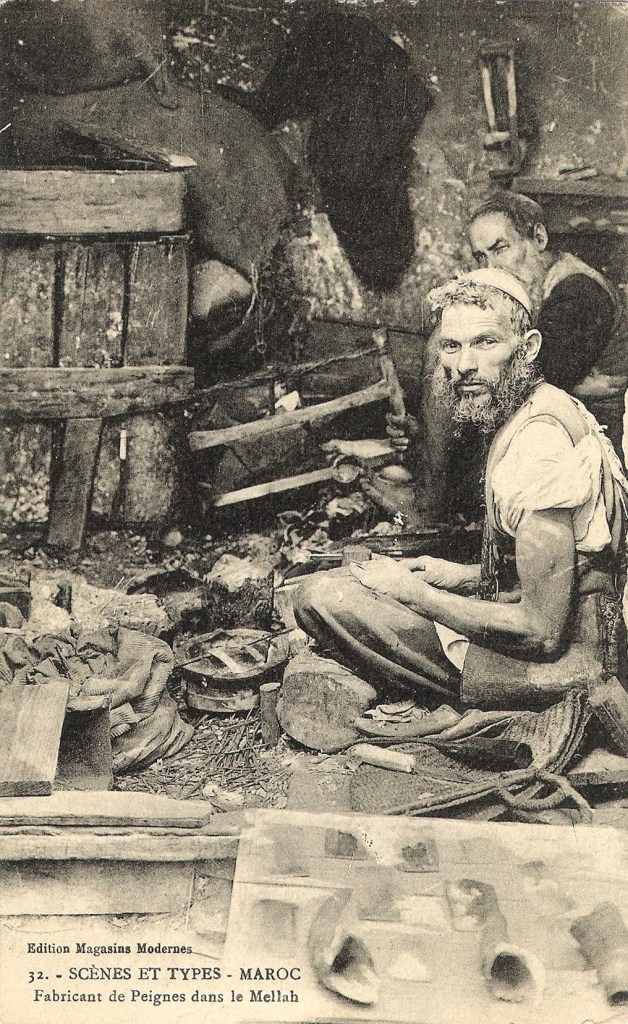
Tangier was later Portuguese, before becoming Spanish and English between the 15th and 17th centuries, then again Arab, before becoming, in the 20th century, the only example of a city with international status and management.
In fact, it was some of these conquerors who, over the centuries, granted the city a special regime, thus defining its unique status.
The Romans, present for five hundred years, made it the capital of the province of Mauritania. Its inhabitants were considered full-fledged citizens rather than colonized peoples. They also enjoyed economic privileges. One of them became emperor of Rome.
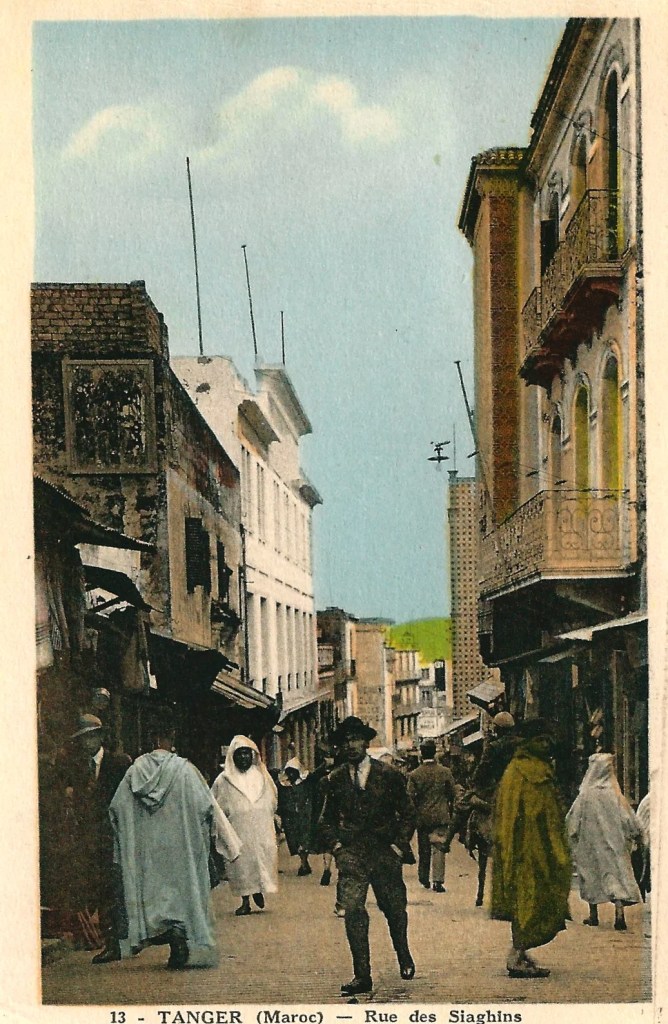
In fact, the Arab town grew out of the ancient city. The famous Rue des Syaghines, in the medina, was a Roman road leading down to the Petit Socco, which was its forum. The large mosque further down towards the port was built on the rubble of a Portuguese cathedral, replacing a mosque built on top of an ancient temple.

As the Roman Empire turned to Christianity, so did Tangier. Its colonization by the Byzantines (from 533 to 621) reinforced the conversion of many Berbers, cohabiting with others who had adopted the Jewish religion. It's worth remembering that one of the Fathers of the Church, Saint Augustine, was a Berber.
The Arab invasion in the 8th century led to the Islamization of the region, and Tangier became the bridgehead of the Muslim conquest of Andalusia, and one of the beacons of the magnificent Arab-European civilization that was born there. The port city benefited both economically and militarily.
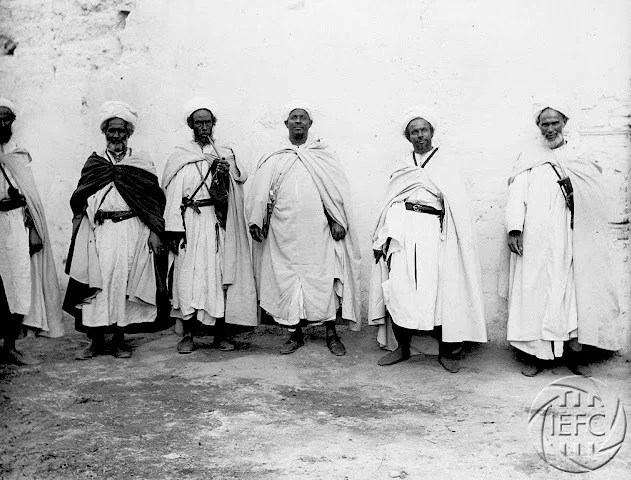
In 1471, Portugal conquered Tangier until the terrible Battle of the Three Kings, in which some 100,000 Moroccan soldiers defeated the Lusitanians near Larache.
Tangier remained under Spanish rule until 1661, when it came under British rule. The British strengthened the port and military infrastructures and, above all, granted numerous fiscal and economic advantages that helped the region prosper. They brought tea in their ships. Garnished with mint leaves, very sweet and in a ceremony that became picturesque, it became the emblematic drink of Morocco.

Tangier was taken back from the UK in 1684 by Moulay Ismaël, second Moroccan sultan of the new Alaouite dynasty. The new master of Tangier preserved his military and economic functions, as well as his commercial and fiscal privileges.
From the 18th century onwards, Tangier was to become the diplomatic capital of the Cherifian kingdom and sail towards its international ambitions.
Tangier was polytheistic, Christian and Muslim, and is now, like the rest of Morocco, a land of Islam living in harmony with its religious minorities.
It's also this crossbreeding, born of centuries of invasions, with its share of alliances, sexual mixtures and, alas, rapes, that has produced Tangier's singular cosmopolitanism.
Tolerant and extremely considerate of others, it can also be seen in the mosaic of faces you encounter in the streets, among the troubling jet-eyed brunettes and handsome blue-eyed blonds.
TANGER, INTERNATIONAL AND MODERN
Tangier was never an imperial capital like Meknes, Marrakech, Fez or Rabat.
Yet in the 18th century, already a military stronghold (soldiers made up a large proportion of the population) and commercial port, the city also became the diplomatic center of the Moroccan kingdom.
It was to avoid too great (and dangerous) a proximity to foreign powers that the sultan confined their representatives to the north of his country, gradually sacrificing to them this off-center city, so close to Europe, with easy access by sea. The Mendoub, his official representative, was the diplomats' interlocutor.

In 1777, Morocco was the first country in the world to officially recognize the independence of the United States, so the first embassy of the new American republic was set up in Tangier.
In 1849, Giusepe Garibaldi, the fugitive hero of Italian unification, found refuge here for a few months to write his memoirs.

More and more foreigners are staying in Morocco's foreign affairs capital.
They colonized the town, creating a cosmopolitan atmosphere. Trading (as well as smuggling) became increasingly important. Dozens of merchants from all over the world settled in the city, including Hindus!
Streets and shops were named in every language.
Hotel Velasquez, Bijouterie des amants, Lisboa café, restaurant le Marquis, Casa Pepe, Dean's Bar, Les Magasins modernes, Ciné Goya, Charcuteries et Tabac, Paris Beauté, Coiffeur Tripoli, Salon de coiffure chez Jean, salon de thé Madame Porte, Country Club, Grand café de Paris, rue des amoureux, rue Shakespeare, calle Italia are just some of the names that flourish as you stroll along.
Likewise, currencies from all over the world circulate in the city. Yen, dollars, francs, pounds and pesetas piled up on the exchange desks, while the international rates of the various currencies were written on a slate.

Transnational banks were created. They also enabled Moroccan merchants to make payments abroad. Spanish banks played a key role in the city's urbanization.
Tangier was Morocco's most important port before the creation of Casablanca. Cattle were sold twice a year at the Grand Socco market. Thousands of head of cattle left for Gibraltar, Ceuta, Marseille or Barcelona. Thousands of tons of goods were also shipped from the bay to destinations all over the world.
Whereas other Moroccan cities were closed, it became the gateway to the world.

In fact, modernity arrived in Morocco via Tangier. The post office and the rapid spread of mail, the telephone in 1883, the telegraph, rail and air links all arrived in Tangier, and much later spread to the rest of the country.
Tobacco and opium are a Tangier monopoly. And even Coca Cola invaded Africa, setting up a factory in Tangiers in 1947!
Foreign schools also flourished in the city to educate European youth. The Lycée Regnault was founded by the French in 1913.
The first printing works in Morocco were built by an Englishman from Gibraltar. The press developed, including in Arabic. The first national daily newspaper, La Dépèche Marocaine, was born. Similarly, the growth of tourism led to the establishment of the first hotels and palaces.

Later, Tangier would rival the Riviera, with billionaires hesitating between its interloped charm and that of the more conventional Monte Carlo.
In addition to the rivalry between the various colonial powers for control of Morocco, this major foreign presence gradually changed the city's appearance and governance.
Several plague epidemics devastated the Tangier region.
The last one wreaked havoc in 1855.
In response, the Western consuls decided to set up a Sanitary Council to take over from the Moroccan authorities to manage the city's hygiene and health, and to oversee the slaughterhouses and markets. It may levy taxes for this purpose.
France will build a hospital in the new Mershane district. Other countries such as Italy and Spain followed suit. The Institut Pasteur in Tangier was inaugurated in 1913.
Little by little, this Sanitary Council would become more involved in the management of the city. The meeting of diplomats will deal with roads and public works, and will also determine the layout of the first streets to be built outside the medina.

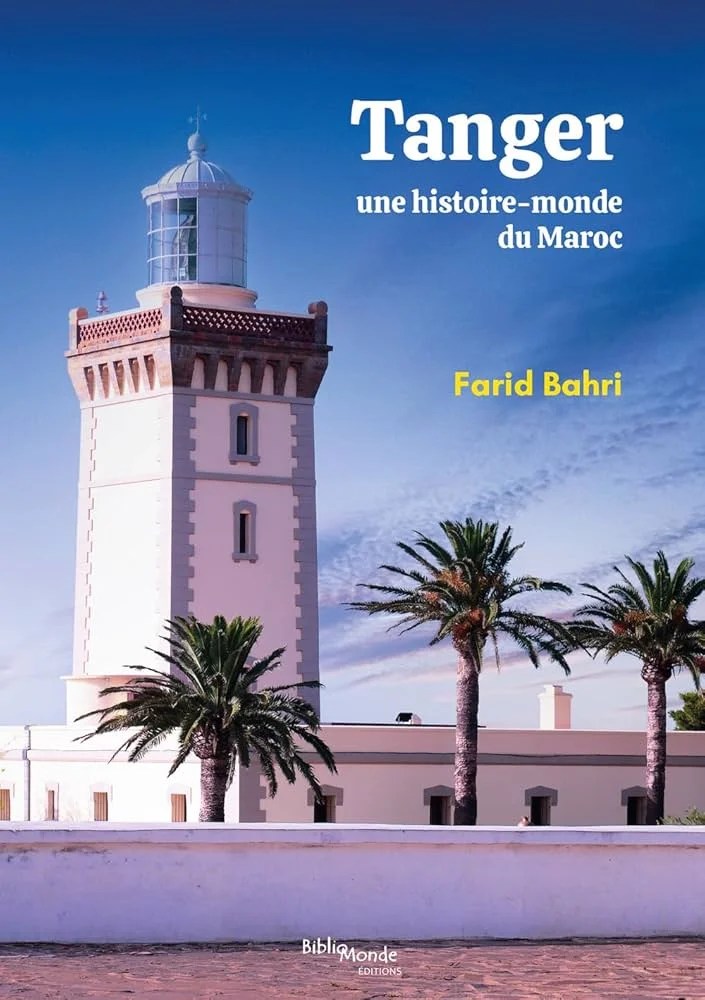
It will also decide on the international co-construction of the Cap Spartel lighthouse to facilitate maritime traffic.
It has become one of the world's most popular tourist destinations, as it faces the point where the Atlantic and Mediterranean meet and mingle.

It was during this period that the church in the heart of the medina was built. It is, without doubt, the only example of a Christian religious building in an old Arab town. This harmonious cohabitation of religions was and still is one of Tangier's qualities. Like having no Mellah, the Jewish quarters that existed in the kingdom's other cities. The city had seventeen synagogues and numerous churches, including a Spanish cathedral.

Social life intensifies. Tennis, bridge, dinners, balls and shows follow one another in every community.

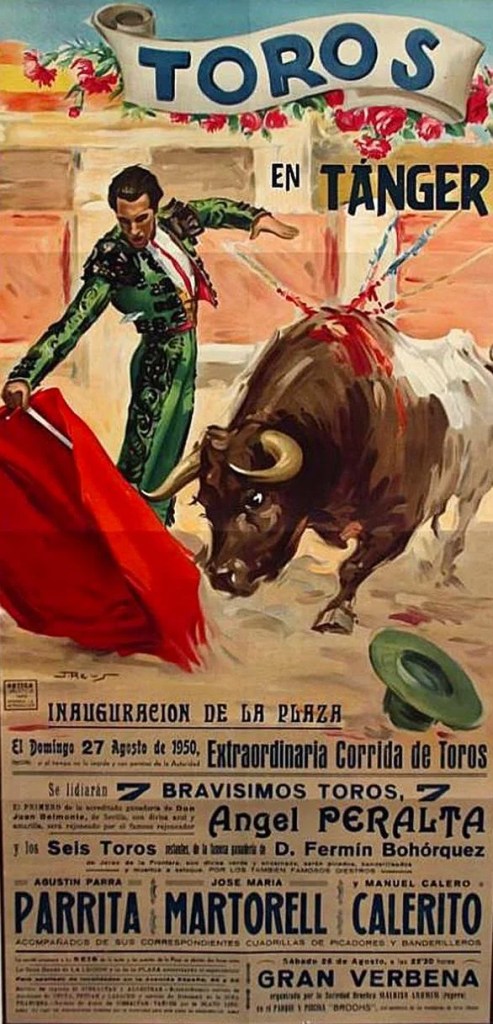
The Tangier golf course, created in 1914, is the oldest in Africa. The Cervantes Theatre plays host to all the big stars of the day. Bullfighting is also very much in vogue in this part of the African continent. Tangier's bullrings rival those of Spain in renown. Indeed, aficionados often cross the Straits to watch Moroccan bullfights!
Imagine the Rue des Syaghines, now dedicated to made-in-China trinkets, as the Champs-Elysées of Tangiers.
This thoroughfare was home to luxury stores and boutiques displaying the latest fashions from Paris, Barcelona and London, with ladies in veils greeted by men in top hats.

Aperitifs were served on the terraces of the Petit Socco, where social gossip, business conversations and later secret information and espionage were exchanged.
A legacy of this era, the cafés of Petit Socco, although they no longer serve alcohol, are the only ones to remain open during the day during Ramadan.
This allows tourists to sip delicious orange juices or teas, under the indifferent or envious eye of fasting Muslims.

The town remained confined within its ancient ramparts until the mid-19th century. Wealthy Europeans and Moroccan families had built villas in the countryside on the outskirts of the town.
It was around these resort buildings that the modern, more European town developed.

Boulevard Pasteur and Place de France became the main thoroughfares of the new town. They were initially laid out on dunes, hunting grounds and orange groves.
Real estate companies, such as the one founded in 1907 by the Banque de Paris et des Pays-Bas, the Banque d'Indochine, the Schneider group and the Compagnie de Suez, took over these new districts.
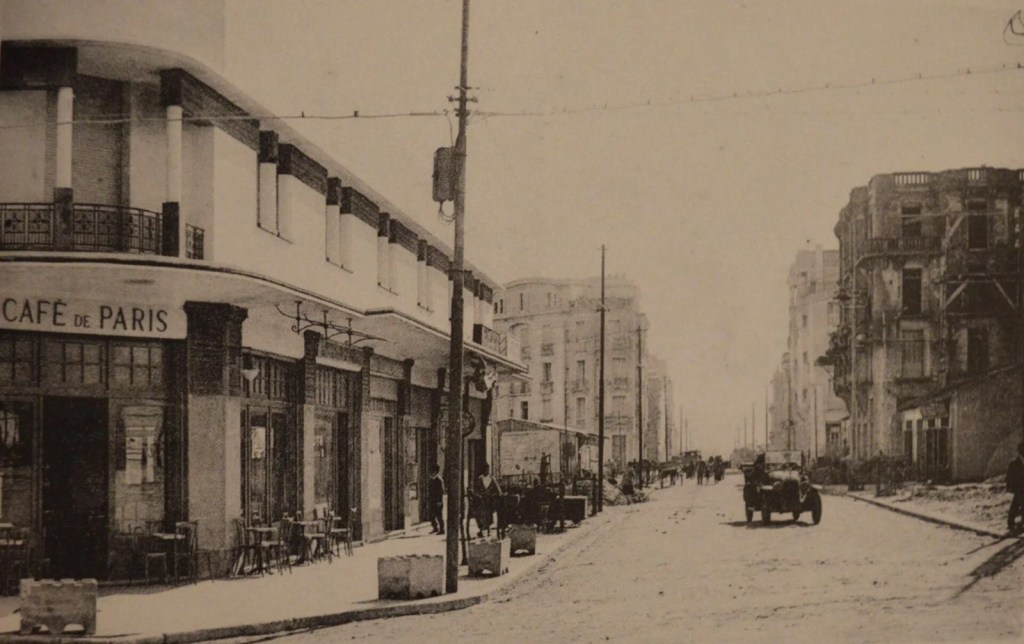

The historic town also began to change. The cannons were removed from the ramparts, the Continental Hotel was built for visiting celebrities, a railway station was built in front of the beach, docks were built for cruise ships, colossal buildings such as the splendid Renshhausen building and a host of hotels were built in the Spanish Quarter. Polluting artisanal activities such as tanneries were removed to give the waterfront a better image.
The interior of the medina is also changing.
Most consulates, apart from that of the United States, deserted the city to settle in the modern city, which became the center of politics and business. France built a consulate here in 1929.

Several gateways were demolished to widen the Rue d'Italie, which was adorned with superb Spanish-style bourgeois buildings.
The upper part of the old town, the kasbah, has been little altered and remains, even today, as it was for centuries.

Nevertheless, it was during this period of phenomenal growth and transformation of the city that events took place that reminded us that Tangier remained singular.
These events feature a Sherif (descendant of the Prophet), Mohahmed El Raisuni, leader of the Jbala tribes of the Rif. Despite his aristocratic origins, Mohahmed El Raisuni's life was worthy of a novel.

Journalist Walter B. Harris, who was a victim, describes him in his book Le Maroc disparu: " I must admit that he was almost attractive. Tall, remarkably graceful, with very white skin, a shadow of mustache and beard, black eyes and a profile more Greek than Semitic, Raisuni was the ideal type of the perfect bandit. With his companions, he was haughty and aloof, and they treated him with the respect due to his birth."
Raisuni made a name for himself by stealing cattle with his troops and, above all, kidnapping celebrities for ransom.
Walter Harris and a military advisor to the Sultan, Sir Harry Mc Lean, were abducted. It was the kidnapping of Ion Perdicaris, a wealthy Greek-American living in Tangier, that made him internationally famous. Annoyed, President Roosevelt threatened to declare war on Morocco and sent warships.
The hostage was freed for $70,000, and the brigand became Pasha of Tangier and governor of the province.
His sumptuous palace still stands in Asilah, a charming seaside resort near Tangiers.

The character inspired Hollywood cinema with John Milius' film The Lion and the Wind, in which Raisuni is played by Sean Connery.
TANGER, CITIZEN OF THE WORLD
The incessant rivalries between the great colonial powers, their desire to conquer a Morocco that had managed to remain independent of the Ottoman Empire, and the belligerent landing of German Kaiser Wilhelm II in Tangiers, were to precipitate matters.
In 1912, a Franco-Spanish treaty confirmed that " the city of Tangier will keep the special character which has been recognized and which will determine its municipal organization ".
Ten years later, another treaty, the Treaty of Paris, gave it the status of an International Zone, the only example in world history of several countries co-managing a territory.
In the words of French writer Paul Morand: " Tangier owes its freedom to the jealousies of the powers that be; the city was supposed to belong to no one ".
He also wrote of Tangier, where he lived for several years: " I don't much like Tangier. It's an official person, a diplomatic fiction. It doesn't grow deep roots in the land of Africa.
An international city, its sewers are Spanish, its electricity English, its streetcars French, and in this trap invented by the chancelleries (to prevent the entrance to the western Mediterranean from belonging to one), there are few true Moroccans. But Tangier is beautiful the minute you look out over the Atlantic and see Gibraltar at a glance.
For thirty years, Tangier was co-administered by France, Spain, Great Britain, Belgium, the Netherlands, the USA, Portugal, Italy and the USSR. The city was governed by an assembly of international civil servants and Moroccans appointed by the Mendoub (who retained authority over the Sultan's subjects), headed by an international administrator. The city's judiciary and police force were also internationalized.
Tangier will become a Westernized island at the tip of Africa, a neutral zone and a veritable tax haven.
The international city is free of customs duties, including gold, exchange controls and taxes. Numerous companies set up shop here, and money flowed freely in the streets.
Morand describes " a whole world of power brokers, proxy signatories, murky businessmen disguised as tourists, consulting lawyers, parasites and unofficials of all kinds. "
Beaucé, in La Chute de Tanger, recounts: " Here, there were no exchange controls or monetary discipline. You could play with all the currencies in the world with impunity, moving your money in and out of the country without a single customs officer poking his nose in.
All that was needed was to set up a subsidiary in the international city. More often than not, these were no more than offices or nominees, and decisions continued to be taken in the major European capitals. Perched on its branch, the money remained free to escape elsewhere at a moment's notice.
Tangier was a gigantic open aviary of noisy, colorful currencies. Next to it, Europe seemed so narrow, so fearful, huddled within its borders and restrictions. "
After the Second World War, the city had a population of 150,000, 30% of whom were foreigners, and... 85 banks. There were 15 before the war!
Inaugurated in 1919, the airport has daily connections with Paris.
" Tangier evolves in a world apart, where outside events are only muffled, and don't really worry. What force could alter the protection of the guardian powers?
The focus was on local business, social life and entertainment. The city of money remains frenetic and sulphurous, and the charm still works: eccentrics and writers settle here or continue to live here, " describes historian Jean-Pierre Debats.
In his fine book Tanger et autres Maroc, writer and former ambassador Daniel Rondeau sums up what this International Zone was all about: "Tangier, not quite Africa, was more than Europe. Until 1956, the city, protected by the angel of the bizarre, enjoyed unprecedented status. Nine guarantor powers, a string of consulates and legations, three posts and four currencies. A land of milk and honey for the international heartland. Merchants, fire-eaters and bankers are Indian or Pakistani, antique dealers and masons are Spanish, viveurs and patissiers are French, aristocrats, spies and gangsters are English. The Americans couldn't be outdone. They sent several delegations, all in the service of letters, to take part in the concert of this strange League of Nations. "
For years, there was always a liner warming up in New York, bound for Tangiers", recalls Daniel Rondeau, " They all went on it: Paul and Jane Bowles, Truman Capote, Gore Vidal, Kerouac, Ginsberg, Brion Gysin, Tenesse Williams and Burroughs".
Wealthy Americans like Barbara Hutton and Malcolm Forbes came to live here, as did many other wealthy people, and Tangier took on the air of an African Riviera.
This opulence obviously attracts traffickers of all kinds.
The Pearl of the Strait will also become the Sulphur of the Strait...
TANGER, NAUGHTY AND LIBERTINE
In every port of the world, pirates, smugglers, burly sailors, licentious morals, prostitutes and harlots, gambling dens, shady bars and brothels all congregate. Tangier was no exception.
When asked " Why Tangier?", the American writer William Burroughs (who wrote The Naked Feast here) had this to say: " For the boys and the hashish!
Indeed, it was this constant fullness and ecstasy that troubled all travelers. An impression of the sweet life, of easy sex, of moral idleness, that had everyone in a panic.
Joseph Kessel, in his novel Au Grand Socco, dedicated to Tangier, also noted this: " The sun, the two seas, the color of the Arab costumes, the pretty alleys of the old city, the beauties of the Kasbah, the easygoing and amiable customs, all this makes certain foreigners believe that life here is detached from all worries, as if on a desert island. And people stay, stay here, without work, without purpose. "
" Easy-going, amiable morals ": that's part of the charm of Tangier, in addition to the sumptuous parties that dominated its social life. Jane Bowles fell madly in love with Cherifa. Tennessee Williams, Truman Capote, and above all Paul Bowles and Jean Genet, attracted by the bodies and love of boys, contributed to Tangier's interloping fate. Sailors, among other wanderers, too.
In his childhood memories, filmmaker Moumen Smihi describes this city turned whore: " The Ciné-Americano was at the entrance to the largest Mediterranean brothel, Trou Ben Charki. The whole block, a good dozen alleyways, were entirely occupied by prostitutes. There were girls everywhere in the streets (...) After the stairs, once you'd passed under the Andalusian gate, you'd find yourself in a Satyricon-style setting. We hung out there all day, in the stream of sailors from all over the world. Men and women kissed in the streets, they drank, they smoked kif in long pipes, they ran and flirted in all directions. There were love scenes in the doorways."
THE FALL OF TANGER
The Second World War could have disrupted Tangier's prosperity and tranquillity. But it didn't. Nothing at all.
Taking advantage of the hostilities, Spain, which ruled northern Morocco while France maintained a protectorate in the south, decided to annex Tangier. In June 1940, Iberian troops invaded the city and its international status was suspended.
The conflicts did not, however, change much in the lives of the people of Tangiers, who suffered no bombardments or restrictions. Only espionage activities intensified in a hushed war between Allied and Axis forces.
Tangier regained its status on August 31, 1945, and life resumed as it had always done.
However, in reality, the end of this idyllic period for Tangiers, at least for Westerners and businessmen, is already in the making.
On April 10, 1947, King Mohamed V came to Tangier. He gave a speech calling for his country's independence, hailing the Pearl of the Strait as a " vital point of the Cherifian Empire ".
History is on the march again, but the privileged few don't want to realize it. They continue their carefree lives in unspoiled territory, while the fire spreads to the rest of the country. A popular riot in the city streets in March 1952 begins to worry them.
Paul Morand left the city immediately afterwards.
The last years of Tangier's paradise are well described by Thierry de Beaucé in his book La Chute de Tanger: " Independence seemed inevitable. Tangier would not escape it, and would sooner or later have to join the new Morocco.
The bankers had ended up betting on the nationalists. Now they were looking for Arab nominees to manage their assets in case of catastrophe. Friendships changed, in anticipation of revolution. Gold was rising too, to be easily transported if the tide came in too fast. Summer was coming to an end, so heavy. The city took on tones and rhythms that were not its own. In autumn, orange sellers refused to hang around in the evening and closed their stalls before dark. The café terraces emptied. There were no more paseos on Boulevard Pasteur, and boys stopped teasing sidewalk girls out of an abundance of caution.
Moroccans were no longer invited to the parties, except for Ahmed, who looked more and more like an Italian and gave up his djellaba. "
A dull anxiety, an impression of shipwreck, of the end of a world takes hold of the inhabitants, but they don't let it show. The party goes on, the orchestra plays the most beautiful tunes and the smiles freeze into grimaces or into the nostalgia for lost times described by Daniel Rondeau: " For a little of the houses of Cape Spartel or the walls of the Kasbah, you'd think you could reach out and touch Spain. So close, in fact, that for years, Europeans have crossed the Strait like fords in a river, in summer, to go picnicking at a friend's house. People came from all over, for a week, for a month, for life. Tangier was a slightly melancholy romp for the half-soldiers of the modern world. They came down to the Soccos for a love affair, for grief, to be forgotten, forgiven or consoled, for pleasure, for light, for nothing, out of vice or necessity. In the morning, they bathed in the Atlantic. In the evening, they soaked in the Mediterranean. The heat and cold whipped their blood. At night, they smoked kif or drowned in champagne. Without moving from their villas, they kept one foot on each continent. This motionless gap between Europe and Africa, all the drunkenness and a few sunburns, turned their heads. They'd lie back in deckchairs and say, "Isn't that just great?
In 1956, Moroccan independence was proclaimed. The new Moroccan government took over from the international administration. Panic gripped all those who had benefited from this extraordinary situation. Many fled or hid their assets in other paradises.
Tanger Zone internationale is no more.
This interlude lasted some thirty years, during which the city radiated a festive, affair-like atmosphere that attracted and dazzled the whole world.
Tangier once again became a fully Moroccan city. King Mohamed V, aware of these advantages, granted Tangier a free zone.
In 1961, Hassan II acceded to the throne.
He has little love for this sulphurous city and rebellious region. Indeed, it was in the Rif that the only (and short-lived) republic existed in Morocco's history.
The king let it wither away. The stateless city gradually lost its lustre, but was unable to hold on to the kingdom.
It remained proud of its history, painstakingly patching up the wreckage of its decadence.
One cinema after another closed. The superb Teatro Cervantes was condemned to oblivion. The Colonnes bookshop, which had seen some of the world's greatest writers pass through its doors, cowered. Numerous hotels, bars and prestigious buildings were nothing more than decaying, ghostly remnants of a bygone era, adorning a languid city.
Femme fatale, Tangier had become a sleeping beauty.
THE RENAISSANCE OF TANGER
Sovereign Mohamed VI understood the opportunity represented by the city and its strategic location. The King launched a dazzling tourism and economic development program, accompanied by unbridled urbanization and a proliferation of infrastructures and projects. And, indeed, Tangier can look back on a spectacular renaissance. Its metamorphosis is continually praised by the world's media. It is cultivating its seaside charm with a renovated port and waterfront, and showcasing its heritage gems with the rehabilitation of historic districts.
And thanks to the phenomenal increase in air connections, tourists are returning in droves. Tangier offers them both the excitement of trendy, festive places and the tranquillity of old quarters, where they can stroll and meet the most unlikely people.
Leaving ostentatious Marrakech and its mass tourism behind, a growing number of celebrities and artists have made Tangier their new resort. The Pearl of the Strait is reviving its festive and libertine past.
In economic terms, the region is also performing miracles. The TangierMed port, the free trade zones, Renault and soon a Chinese industrial city are just some of the many examples of this incredible take-off. The Al Boraq high-speed train puts Tangier an hour from Rabat (the political capital) and two hours from Casablanca (the economic capital). It further accelerates the opening-up of the northern tip and facilitates business.
Tangier recaptures the dynamism of its prestigious past. And surpassing it.
While remaining a very special city.
Soccer matches between Real Madrid and Barcelona's Barça are more popular here than those between Moroccan teams. In some neighborhoods, cell phones alternate between the Moroccan and Spanish networks. The people of Tangier continue to converse in several languages, including French, Spanish, English and Darija, and always welcome foreigners with curiosity and kindness.
Anthropologist Michel Peraldi agrees. In the midst of change, Tangier has retained the special character of its past: " Everything has moved so fast that the city now looks like a palimpsest. There are archaeological testimonies to its past glory, like these baroque cafés or shops frozen in time, where even the light bulbs have never been changed since the 1930s. (...) Tangier was an international city in another era; today, it is in a transnational, Euro-Mediterranean space-time."
That's how Tangier was. And so Tangier still is.
Always near and far, similar and singular, buzzing and peaceful, maddening desires, mysterious as a courtesan, continually between two shores.
Truman Capote, author of In Cold Blood and Breakfast at Tiffany's, made this observation after a summer spent in the city: " Almost everything in Tangier is abnormal (...) There is an alarming number of travelers who have landed here for a brief vacation, then settled down, then let the years go by. For Tangier is a harbor, and one that encloses you; a place sheltered from time. The days glide by you, without you noticing them any more than the foam drops on a waterfall. "
That was in 1949.
In the dazzle of our first steps in Tangier, we could write the same words...
SEE
READ
LISTEN
